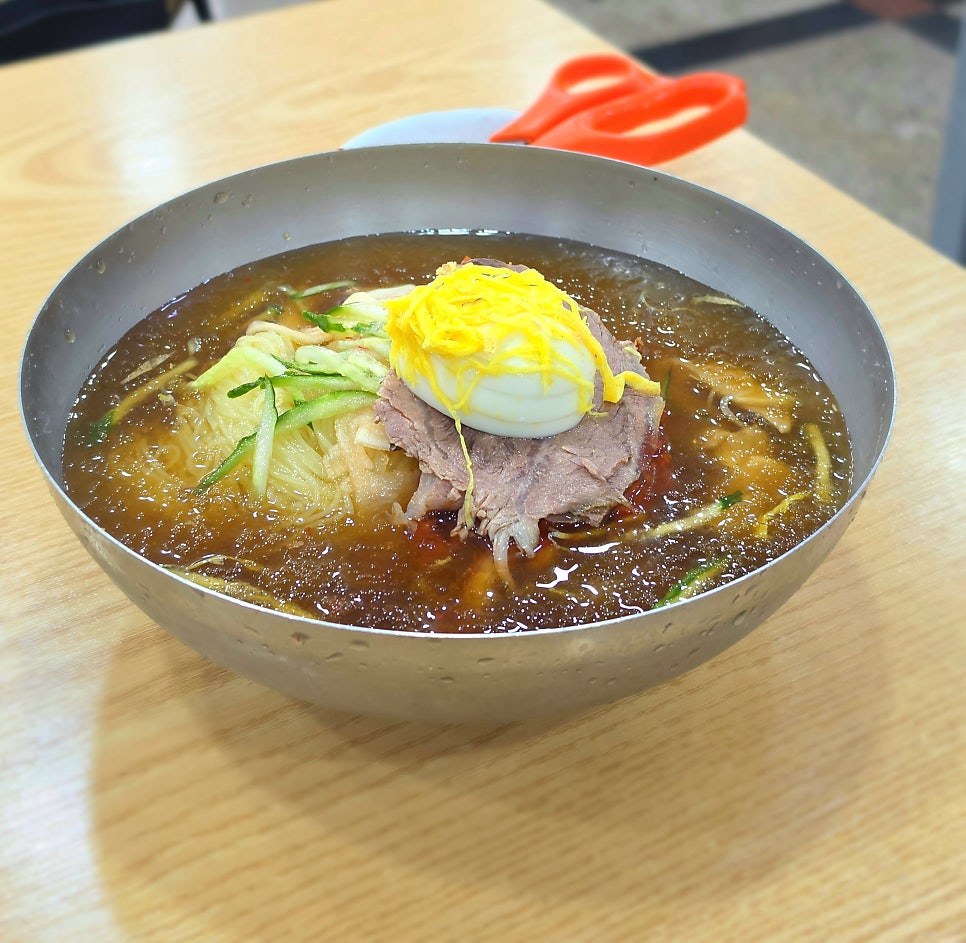
If you only eat one bowl of noodles in Busan, make it Milmyeon (Busan Wheat Cold Noodles), and if you are staying anywhere near Seomyeon, the classic place to try it is Chunhachudong Milmyeon (춘하추동밀면), Seomyeon Main Branch. The name means “spring, summer, autumn, winter”, a hint that locals eat this icy noodle soup all year round, and the menu board proudly says SINCE 1991. This guide to Seomyeon milmyeon covers the walk from Seomyeon Station, the full menu with prices, how to use the self-serve hot broth, what each bowl tastes like, the best time to beat the line, and where to park.

Essentials before you go
- Address (show this to taxi drivers): 부산광역시 부산진구 서면문화로 48-1
- Subway: Seomyeon Station (Busan Metro Lines 1 and 2), Exit 9 or 11, about a 5–7 minute walk
- Hours: daily 10:00–21:30; in winter the shop closes at 21:00
- Phone: 051-809-8659
- Seating: two floors, tables for 2–4, group tables, high chairs for babies
- Parking: no private lot; use paid or public lots nearby
- Takeout and delivery: both available
No separate break time is posted, but holiday schedules can change, so check a map app on the day before you head out.
What is milmyeon, and why this one is different
Milmyeon was born in Busan during the Korean War, when refugees from the North recreated their buckwheat cold noodles with wheat flour, which was far easier to get. Compared with Pyongyang-style Naengmyeon (Cold Buckwheat Noodles), the noodles are much chewier and the broth usually leans sweet and tangy.
Chunhachudong takes a slightly different road. Its broth is brewed with traditional Korean medicinal herbs, so the first sip carries a soft herbal aroma, followed by a deep, rounded meat flavor. Many people find it addictive; others find it unfamiliar. Knowing this in advance helps you choose between the two bowls. The origin label next to the menu states that the ingredients are Korean-grown, and the broth is made in house.
Menu and prices (2026)

| Menu (Korean) | Price | What it is |
|---|---|---|
| Milmyeon (밀면) | ₩10,000 | Cold wheat noodles in icy broth |
| Milmyeon, large (밀면 곱) | ₩12,000 | Bigger portion of noodles |
| Bibim Milmyeon (비빔밀면) | ₩10,000 | Spicy mixed cold wheat noodles |
| Bibim Milmyeon, large | ₩12,000 | Bigger spicy bowl |
| Mandu (만두, Dumplings) | ₩7,000 | 8 steamed dumplings in a steamer |
| Pyeonyuk (편육, Sliced Boiled Pork) | ₩12,000 | Thin slices of boiled meat |
| Sari (사리, Extra Noodles) | ₩3,000 | Extra noodles for the soup bowl |
| Bibim Sari (비빔사리) | ₩5,000 | Extra noodles with spicy sauce |
| Gogi Sari (고기사리, Extra Meat) | ₩6,000 | Extra meat topping |
| Soft drinks | ₩2,000 | Canned sodas |
There are only two noodle dishes, so ordering is easy. A large size adds ₩2,000; on the board it is written as 곱 or 특. Staff take your order at the table. If you cannot handle spice, ask them to leave out the dadaegi (다대기, red pepper paste) or serve it on the side.
Start with the free hot broth

Near the entrance there is a stainless steel urn of hot meat broth called onyuksu (온육수, warm broth). Use the ceramic cups for the hot broth; the plastic cups by the water dispenser are for cold water only. Add a pinch of black pepper if you like and sip it while you wait. It is rich, savory and comforting, and plenty of diners go back for a second cup.

How each dish tastes
Milmyeon: icy, herbal and clean

The soup version arrives in a wide steel bowl filled with broth that has turned into fine slush rather than chunks of ice, so you can taste it straight away. On top sit yellow egg strips, julienned cucumber, pickled radish, half a boiled egg, slices of meat and a spoonful of red dadaegi in the middle. The noodles are thin but springy, with a pleasant bite. The broth is not aggressively sour or sweet; it is clean with a gentle herbal depth, and the seasoning is on the mild side. Add vinegar and mustard from the table a little at a time until it suits you.

Bibim Milmyeon: less herbal, more heat

The mixed version is covered with a generous scoop of sweet, tangy and spicy sauce, egg strips, cucumber and sesame, and the sauce hides pieces of seasoned raw skate for extra chew. The herbal aroma is much lighter here and the heat is stronger, so if you are unsure about herbal flavors, this is the safer pick. It is spicy in a savory way rather than painfully hot, but you can scrape off some sauce before mixing. Alternate bites with sips of hot broth.
Mandu (Dumplings) and Pyeonyuk

A plate brings eight steamed dumplings with chewy skins and a mild, savory pork filling. They are a good partner for the tangy noodles, though they are a solid side rather than a destination dish. Pyeonyuk (₩12,000) gives you a whole plate of the tender, slightly chewy topping meat, which tastes a little like Korean braised pork trotters.

Side dishes are simple: pickled radish slices, yellow danmuji and soy sauce for the dumplings. Vinegar, mustard and soy sauce are always on the table.
Portions
Even a regular bowl holds a lot of noodles, folded neatly under the toppings, and the garnish lasts to the final bite. A large will fill up a hungry adult. Two people sharing two bowls and a plate of dumplings often leave a dumpling or two behind.
Lines and the best time to visit

There is no reservation and no waiting machine: you simply queue at the door and staff call you in. Because the shop uses two floors and the servers are fast, the line moves quickly.
- Weekdays around 11:00: only the first floor is open; the second floor opens around 11:30 once it fills. The calmest time.
- Lunch peak (12:00–13:00): expect 10–30 minutes on weekdays and weekends.
- Weekdays after 13:00: often no wait.
- Dinner: usually little or no wait, up to about 15 minutes on weekend evenings.
There is no indoor waiting area, so in midsummer heat or a cold sea wind, avoid the peak. If your hotel is close, takeout is an easy alternative. The walls are covered with celebrity autographs, which makes the wait go faster.
Getting there and parking
From Seomyeon Station, take Exit 9 or Exit 11 and walk toward Younggwang Bookstore (영광도서); the big red sign appears within 5–7 minutes. By taxi, show the driver 부산진구 서면문화로 48-1 or say “Chunhachudong Milmyeon Seomyeon Bonjeom”.
There is no restaurant parking. The closest option is The One Parking (더원주차장, 부산진구 서면문화로 40), a one-minute walk, at about ₩1,500 per 30 minutes. Eco-friendly cars (EV or hybrid) can get a discount at the public lot behind Yuwon Officetel, 2–3 minutes away. Seomyeon is tight for parking, so the subway is easier.
What to order by group size
| Group | Order | Approx. total |
|---|---|---|
| Solo | 1 milmyeon (large if hungry) | ₩10,000–12,000 |
| Two people | 1 milmyeon + 1 bibim milmyeon + 1 mandu | ₩27,000 |
| Three or more | 1 noodle bowl each + 1 mandu + 1 pyeonyuk | from ₩49,000 for three |
| With kids | Ask for no dadaegi on the child’s bowl, add mandu | — |
Pros and cons
Pros
- A distinctive herbal, deep broth you will not find at most milmyeon shops
- Fine slushy ice instead of solid chunks
- Thin yet chewy noodles and generous toppings
- Two floors and fast turnover keep waits short for such a famous place
- Unlimited self-serve hot broth and Korean-grown ingredients
Cons
- The herbal aroma can feel unusual if you expect a sweet-sour milmyeon
- Seasoning is mild; bold-flavor lovers may find it light
- No parking and no indoor waiting space
- Dumplings are fine but not the highlight
Planning more meals in Busan? For a hot bowl of pork soup, read our guide to Haeundae Dwaeji Gukbap (Pork and Rice Soup) at Obok, and for a seafood feast by the beach, see Gwangalli raw fish restaurant Geumrang Hoetjip. If you need a base that is an easy subway ride from Seomyeon, check our Gwangalli Airbnb pick, Orot Gwangan.
Start with a cup of hot broth, finish with a bowl of icy noodles, and you will understand why Busan eats milmyeon in every season.
Leave a Reply