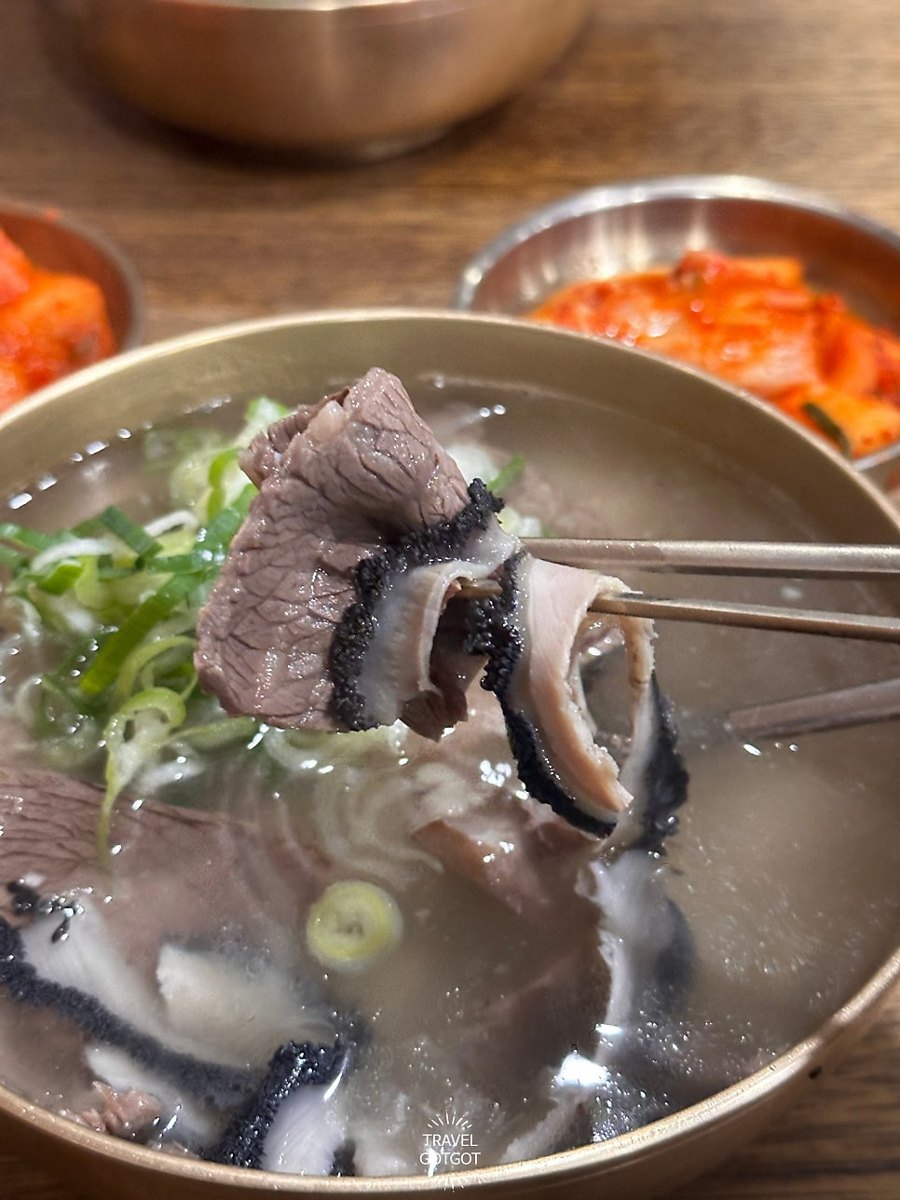
If you are looking for Myeongdong food that locals actually queue for, start with a bowl of soup. Hadongkwan (하동관) has been serving one thing, Gomtang (Korean Beef Soup), since 1939. It began in Suha-dong and later moved to a quiet lane in Myeongdong, and for more than 80 years it has stuck to the same recipe: a crystal-clear broth made only from Korean Hanwoo beef, poured over rice in a brass bowl.
This guide covers just this one restaurant: what is on the menu and what it costs, how the slightly unusual ordering system works, the regulars’ ordering slang, when to go to avoid the lunch rush, and an honest list of pros and cons.

Quick facts
| Name | Hadongkwan Myeongdong main branch (하동관 명동본점) |
| Address (for taxis/maps) | 서울 중구 명동9길 12 |
| Nearest station | Euljiro 1(il)-ga Station, Line 2, Exit 5 – about 280 m, 4 min on foot |
| Hours | Mon–Sat 7:00 am – 4:00 pm (no dinner service) |
| Closed | Sundays, plus the day of and the day after Seollal and Chuseok |
| Reservations | Not accepted |
| Phone | 02-776-5656 |
Myeongdong Food Classic: Why Hadongkwan Gomtang Is Famous
The board above the counter says it plainly: “We use only domestic Hanwoo beef.” The entrance is covered in Michelin Guide and Blue Ribbon stickers, and the City of Seoul lists it as an Oraegage, its program for long-running heritage shops. Still, the place itself is anything but fancy. Wooden tables fill two floors, office workers and elderly regulars make up most of the crowd, and the bowls arrive almost the moment you sit down.
Gomtang is often confused with Seolleongtang (Ox Bone Soup). Seolleongtang is milky white; Hadongkwan’s gomtang is clear, light in fat and built around the flavor of the meat. If you expect a thick, creamy soup it can look plain at first. Then you taste it.

Menu and prices
There are only two dishes: gomtang and suyuk. What changes is the size of the bowl and how much meat and tripe goes in. Prices from the menu board:
| Dish | Price (KRW) | What you get |
|---|---|---|
| Gomtang – Small | 15,000 | Listed as a children’s size |
| Gomtang – Regular | 18,000 | The standard bowl, mostly beef |
| Gomtang – Special 25-gong | 25,000 | More beef plus tripe |
| Gomtang – Special 30-gong | 30,000 | The biggest bowl |
| Suyuk (Boiled Beef Slices) – Small, 130 g | 40,000 | A plate of the beef used in the soup |
| Suyuk (Boiled Beef Slices) – Large | 60,000 | For sharing |
Prices have been creeping up, and some map apps already show the regular bowl at 19,000 won, so treat the board on the wall as the final word. Soju is 5,000 won. Takeaway starts from two portions. The board has English labels (Gomtang, Boiled beef, small / original / special), which helps a lot.

What does “gong” mean?
“Gong” is Hadongkwan’s own way of naming bowl sizes. The higher the number, the more meat and offal. The regular bowl is mostly brisket; from the 25-gong special up, tripe (yang) is added. Not a fan of offal? Say “gogi-ro-man juseyo” (meat only, please) and they will swap the tripe for more beef.
How ordering works (read this before you go)
- Pay first. Choose your dish and size at the counter by the door and pay right away.
- Take the colored slip. Each size has its own color of paper ticket.
- Sit down and hand it over. Staff collect the slip and usually ask once more whether you want tripe. This is your second chance to ask for meat only.
- Your bowl arrives fast. The rice is already in the bowl, warmed by having hot broth poured over it and drained several times (a technique called toryeom), so service takes a minute or two.
On the table you will find salt, pepper and spoons. Sliced green onions, napa cabbage kimchi and Kkakdugi (Cubed Radish Kimchi) come in separate bowls.

Regulars’ slang: “tongdak” and “kkakguk”
You may hear people at the next table order “tongdak”. It sounds like the word for whole chicken, but here it means adding a raw egg to your soup, which makes the broth slightly cloudy, nutty and richer. “Kkakguk” means pouring some of the radish kimchi juice into the soup for a tangy, refreshing kick. A good plan for a first visit: eat a few spoonfuls plain, then add kkakguk halfway through.
How it tastes

The broth is so clear you can almost see the bottom of the bowl, yet it carries a deep, savory beefiness that keeps building with every spoonful. There is barely any grease, the finish is clean, and it is already lightly seasoned, so many people add nothing but green onion. Go easy on the onion, though; too much drowns out the delicate meat flavor.
The beef is thinly sliced but still has texture, then turns tender in your mouth, with no gamey smell at all. The tripe in the larger bowls is chewy and surprisingly mild, even for people who normally skip offal. One honest note: some diners feel the 25-gong only adds a few extra slices compared with the regular, so come for the broth rather than a mountain of meat.


The kimchi is half the reason people come back. The radish kimchi is well fermented and tangy but still crunchy, with the radish’s natural sweetness coming through at the end. The cabbage kimchi stays crisp rather than soggy. Refills are not self-service; just ask the staff. You can also ask for more rice and broth.

What to order
- Solo, first time: Regular gomtang, adding kkakguk halfway.
- Like it rich: Regular with tongdak (a raw egg).
- Offal lovers: The 25-gong or 30-gong special.
- Two or three people: A regular bowl each and one small plate of suyuk to share.
One regular bowl is a comfortable, filling meal for most adults.

Best time to visit, getting there and parking
Weekdays from 11:30 am to 1:00 pm are packed with office workers; you may get a seat at 11:30 and find it full by noon. The calmest window is weekday mornings between 7 and 9 am, and after 2 pm is quieter too. The kitchen can close before 4 pm when the soup runs out, so do not leave it too late. Because it is closed on Sundays, Saturday lunch gets especially busy. With two floors of seating and fast turnover, even a line tends to move quickly. The restroom is on the second floor.

From Euljiro 1(il)-ga Station (Line 2), Exit 5, it is about 280 m, roughly a 4-minute walk. You can also walk over from Myeongdong Station (Line 4) through the shopping lanes. There is no parking lot; a paid public street lot in nearby Sogong-dong charges 3,600 won per 30 minutes, but the subway is far easier in this area.
Pros and cons
| Pros | Cons |
|---|---|
| Clear yet deeply savory broth | 18,000 won for the regular bowl is pricey for soup |
| Tender Hanwoo beef with no gamey smell | Meat portion may feel small for the price |
| Excellent kimchi and radish kimchi | Closes at 4 pm; closed Sundays |
| Opens at 7 am and serves in minutes | Kimchi refills only on request |
For a single meal that shows you what old Seoul tastes like, this is one of the safest bets in Myeongdong. Make it your breakfast before a day of shopping, or slip in just after the lunch rush, and let that first spoonful of broth explain why this little restaurant has lasted more than 80 years.
Leave a Reply